10 Signs Your Florida Roof Needs Attention But Not Replacement
Living in Florida means your asphalt shingle roof faces some of the toughest conditions in the country. Between the intense UV rays, tropical storms, and humidity that never seems to quit, your roof takes a beating year-round. But here’s the good news: not every problem means you need to shell out $15,000 to $20,000 for a complete roof replacement.
If your asphalt shingle roof is showing signs of aging but isn’t falling apart, roof rejuvenation could save you thousands while adding 5 to 15 years to your roof’s life. Let’s talk about the warning signs that say your roof needs help, but not necessarily a total overhaul.
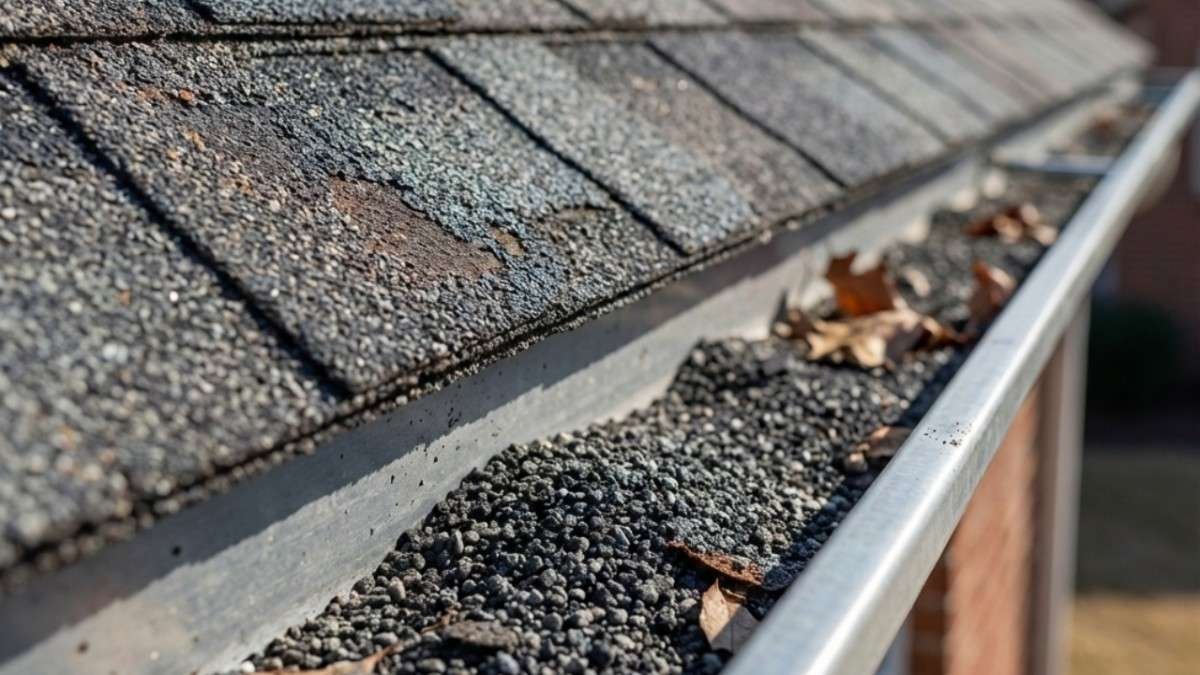
1. Your Gutters Are Full of Granules (Not Just Leaves)
You know those tiny, sand-like particles you find in your gutters after cleaning them? Those are protective granules from your asphalt shingles, and finding them is one of the earliest warning signs your roof is aging.
What’s Happening: Asphalt shingles are covered with ceramic granules that protect them from UV rays and add fire resistance. As shingles age, the essential oils that hold these granules in place dry out. This is especially common in Florida, where the sun beats down on your roof almost daily.
Why It Matters: Once shingles lose their granules, they become vulnerable to UV damage, water infiltration, and rapid deterioration. You’ll notice bare spots on your shingles where the black asphalt underneath shows through.
Can Rejuvenation Help? Yes! Roof rejuvenation restores the oils in your shingles, improving granule adhesion by up to 86% according to independent testing by PRI Asphalt Technologies. This prevents further granule loss and protects your roof from accelerated aging.
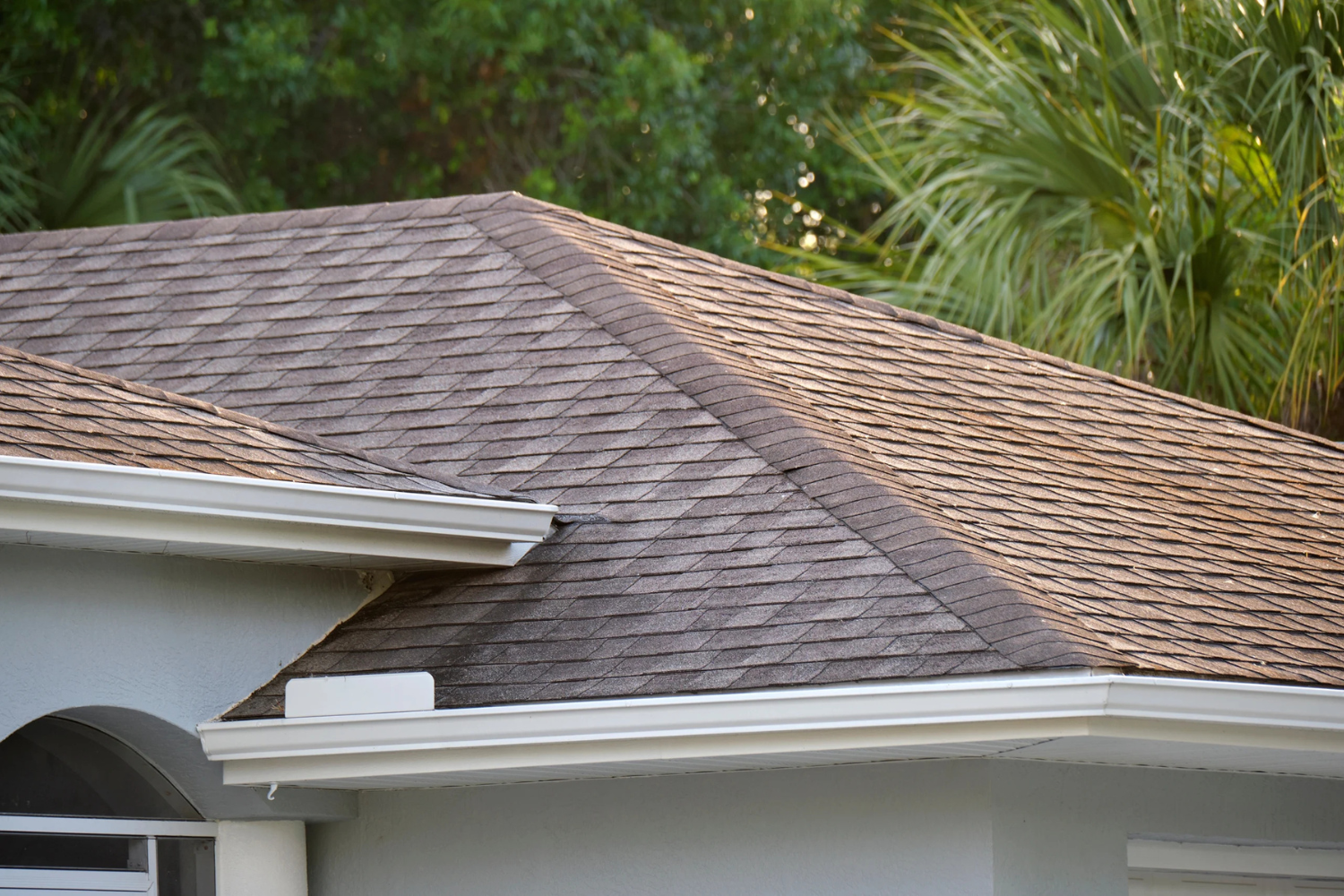
2. Shingles Are Starting to Curl at the Edges
Walk outside and look at your roof from the ground. Do you see shingles with edges that are lifting or curling upward? This is called “cupping” or “curling,” and it’s a classic sign that your asphalt shingles are drying out.
What Causes It: Florida’s extreme temperature swings can hit 160°F during the day and cool to 70°F at night that cause shingles to expand and contract repeatedly. Over time, this stress makes shingles lose flexibility and start to curl.
The Risk: Curled shingles create gaps where wind-driven rain can sneak underneath, leading to leaks. During hurricane season, curled edges are also easier for high winds to catch and rip off.
The Solution: Roof rejuvenation replenishes the oils that keep shingles flexible. By restoring their ability to expand and contract, rejuvenation helps flatten curled edges and prevents further damage at a fraction of the replacement cost. Learn more about pricing in our guide on Roof Rejuvenation Cost in 2026.
3. Dark Streaks and Algae Stains Are Taking Over
Those ugly black streaks running down your roof? That’s not just dirt it’s algae, specifically a type called Gloeocapsa magma. In Florida’s humid climate, algae growth on asphalt shingles is extremely common.
Why It Happens: Algae feeds on the limestone filler in asphalt shingles. As your shingles age and lose their protective oils, they become more susceptible to algae colonization. The algae roots actually burrow into the shingle material, accelerating deterioration.
More Than Just Ugly: Beyond hurting your curb appeal, algae growth indicates that your shingles’ protective barrier is compromised. The dark streaks also absorb more heat, making your attic hotter and increasing your cooling costs.
How Rejuvenation Helps: Bio-oil treatments used in roof rejuvenation disrupt algae root systems and create an environment where new algae growth is inhibited. Many rejuvenation products also contain zinc, which acts as a natural algaecide.
4. You Can See Daylight Through Your Attic Roof
Head up to your attic during the daytime and turn off the lights. Can you see tiny pinpricks of sunlight coming through your roof? This means your shingles are developing small cracks or gaps.
What’s Going On: As asphalt shingles age and dry out, they become brittle. The fiberglass mat underneath can separate from the asphalt, creating microscopic cracks that eventually grow larger. In Florida, UV exposure accelerates this process significantly.
Why You Should Act Now: Those little light spots are future leak points. Once water starts getting through, you’re looking at wet insulation, mold growth, and potential structural damage to your roof decking.
Rejuvenation’s Role: Roof rejuvenation fills these microscopic voids with bio-based oils, restoring the shingle’s structural integrity and waterproofing properties. The treatment penetrates deep into the shingle base, sealing small cracks before they become major problems.
5. Your Energy Bills Keep Climbing
Have you noticed your air conditioning bills creeping up, even though you haven’t changed your usage? Your aging roof might be the culprit.
The Connection: When asphalt shingles lose their reflective granules and oils, they absorb more heat instead of reflecting it. This heat transfers into your attic and eventually into your living space, forcing your AC to work harder.
The Numbers: A degraded roof can increase your cooling costs by 10-15% in Florida’s climate. That’s real money leaving your pocket every month.
Energy Savings Through Rejuvenation: By restoring your shingles’ protective properties, roof rejuvenation helps improve your roof’s UV reflection capabilities. A properly maintained roof keeps your home cooler and reduces the strain on your HVAC system.
6. Missing Shingles After Every Storm
After every thunderstorm or tropical system, you find yourself picking up shingles from your yard. This is more than annoying, it’s a sign that your roof’s adhesive strips are failing.
Why Shingles Blow Off: Asphalt shingles have adhesive strips that seal them to the shingles below. Over time, these strips lose their stickiness as the petro-chemical oils dry out. Once the seal fails, even moderate winds can lift and remove shingles.
The Danger: Each missing shingle is an exposed area where water can penetrate. In Florida’s wet climate, it doesn’t take long for water damage to start.
Restoring Adhesion: Roof rejuvenation strengthens the adhesive bond between shingle layers by replenishing the oils that make the strips sticky again. This significantly reduces shingle blow-off during storms.
7. Shingles Feel Like Potato Chips
If you can safely access your roof (or have a professional check), try this simple test: gently press on a shingle. Does it feel brittle and stiff, like it might crack? That’s a clear sign of advanced oil depletion.
The Science: New asphalt shingles are flexible because they’re saturated with petroleum-based oils. These oils evaporate over time, especially under Florida’s intense heat. Without these oils, shingles become rigid and prone to cracking.
Timeline in Florida: While manufacturers rate asphalt shingles for 20-30 years, Florida’s climate accelerates aging. Most asphalt shingle roofs here start showing significant brittleness after just 8-12 years.
How Rejuvenation Works: The bio-based oils in rejuvenation treatments literally soak back into the shingle material, restoring flexibility at the molecular level. This makes shingles more resistant to cracking from thermal stress and impact.
8. You’re Getting Insurance Non-Renewal Warnings
Florida homeowners know the struggle: insurance companies are increasingly refusing to renew policies on homes with roofs older than 10-15 years, even if they’re not leaking.
The Insurance Situation: Insurers want proof that your roof is in good condition. A visual inspection showing granule loss, curling, or aging might trigger a non-renewal notice even if your roof has years of life left.
A Smart Alternative: Roof rejuvenation is often accepted by insurance companies as proof of proactive roof maintenance. Many Florida homeowners have successfully maintained their coverage by showing documentation of professional rejuvenation treatment, avoiding the need for premature replacement.
9. Water Stains Appearing on Your Ceiling
Small water stains on your ceiling or in your attic are serious red flags. However, they don’t always mean you need a new roof. Sometimes the problem is localized.
What to Check: Water stains can come from failing flashing around chimneys or vents, deteriorated shingles in one area, or compromised underlayment in high-stress zones like valleys.
The Smart Approach: Before replacing your entire roof, have a professional inspection to identify the source. If the problem is limited to specific areas and your shingles still have 75% or more of their granules intact, you can often combine spot repairs with full roof rejuvenation.
Important Note: Roof rejuvenation works best on roofs with minor to moderate aging. If you have active leaks in multiple areas or severe structural damage, replacement might be necessary. However, addressing issues early with rejuvenation prevents reaching that point.
10. Your Roof Is 8-15 Years Old
Age alone isn’t a reason to replace your roof, but it is the perfect time to consider preventive maintenance.
The Sweet Spot: Asphalt shingle roofs between 8 and 15 years old are ideal candidates for rejuvenation. They’ve lost enough oils to benefit from treatment, but they haven’t deteriorated to the point where rejuvenation can’t help.
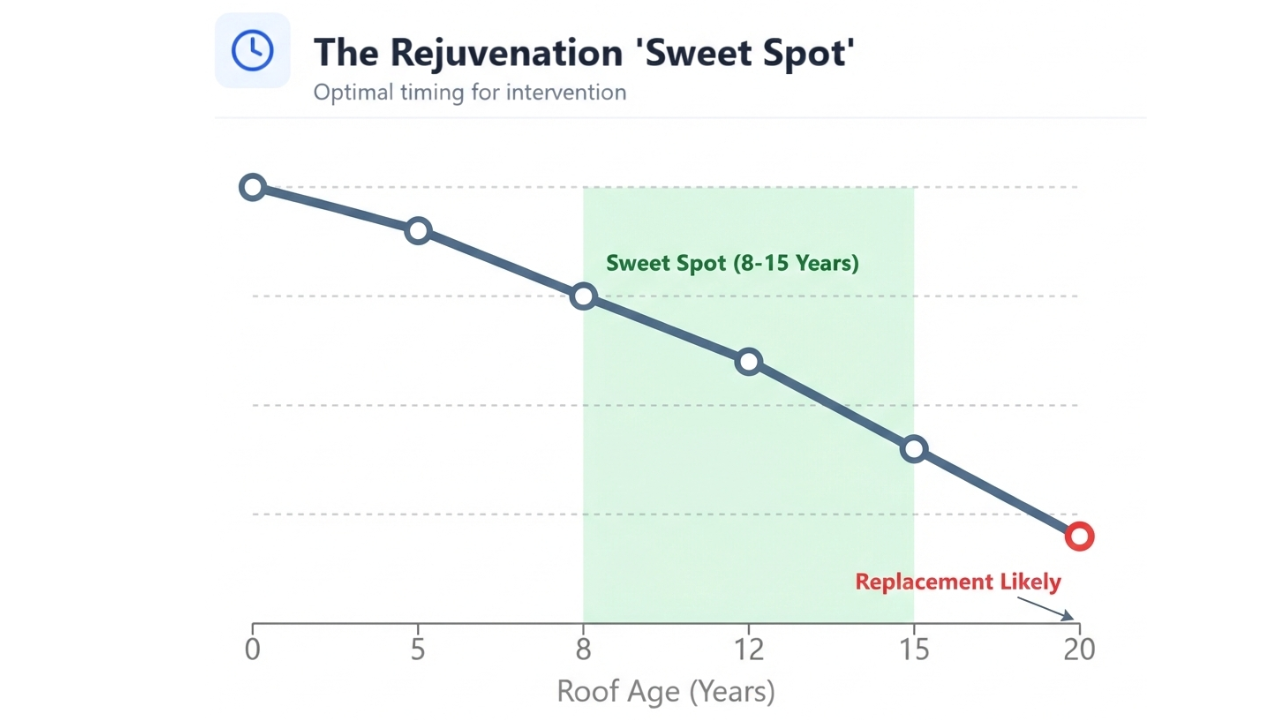
Act Before It’s Too Late: Waiting until your roof is 20+ years old often means the damage is too severe for rejuvenation to be effective. At that point, you’re looking at a replacement. But treating your roof in that 8-15 year window can extend its life by another 5-15 years.
The Cost Comparison:
- Roof Replacement: $15,000-$25,000+ in Florida
- Roof Rejuvenation: $2,500-$5,000 on average
- Savings: Up to 80% while adding significant years to your roof’s life
Why Roof Rejuvenation Makes Sense in Florida
Florida’s climate is uniquely harsh on asphalt shingle roofs. Here’s what your roof faces:
UV Intensity: Florida receives some of the highest UV radiation in the continental U.S., breaking down asphalt oils faster than almost anywhere else.
Heat Cycling: Daily temperature swings from cool mornings to scorching afternoons stress shingle materials through constant expansion and contraction.
Humidity: Constant moisture creates perfect conditions for algae and moss growth, which deteriorate shingles from the outside in.
Storm Exposure: Hurricane-force winds test every shingle’s adhesion, and those with degraded sealant strips are most vulnerable.
Given these challenges, proactive maintenance isn’t optional, it’s essential. Roof rejuvenation addresses all these aging factors by:
- Replenishing lost oils to restore flexibility and waterproofing
- Improving granule adhesion to protect against UV damage
- Inhibiting algae growth through bio-based treatments
- Strengthening adhesive strips to resist wind uplift
- Creating a protective membrane across your entire roof surface
When Rejuvenation Isn’t the Right Answer
Let’s be honest: roof rejuvenation isn’t a miracle cure for every problem. You should consider full replacement if:
- More than 25% of your granules are gone
- You have widespread cracking or missing shingles
- Multiple areas are actively leaking
- Your roof decking shows signs of rot or structural damage
- Shingles are severely curled or damaged beyond restoration
- Your roof is older than 20 years and showing multiple failure signs
A reputable roof rejuvenation company will tell you honestly if your roof is too far gone for treatment. The goal is to catch aging problems early when rejuvenation can be most effective.
Take Action Before Small Problems Become Big Expenses
Your Florida asphalt shingle roof is one of your home’s biggest investments and most important protections. Recognizing these 10 warning signs early can save you thousands of dollars and years of worry.
If you’re seeing any of these signs granule loss, curling shingles, algae stains, brittleness, or age-related concerns it’s time to explore your options. Roof rejuvenation offers a proven, cost-effective alternative to premature replacement for roofs that still have good bones but need revitalization.
Don’t wait until your insurance company sends a non-renewal notice or water starts dripping through your ceiling. Get a professional inspection and find out if rejuvenation can extend your roof’s life and protect your home for years to come.
Ready to save thousands on roof replacement? Contact RoofJuice today for a free inspection and estimate on roof rejuvenation services throughout Florida. Your asphalt shingle roof deserves a second chance and your wallet will thank you.
Continue Reading: More Helpful Roof Care Articles
Explore More About Roof Rejuvenation: