Why a local checklist matters
Florida’s hot sun, heavy rains and hurricane season make roofs age faster than in many other states. A quick, seasonal inspection and knowing what to look for can save you thousands and help you avoid unexpected leaks. This checklist is focused on asphalt shingle roofs. Read it once, save it, and use it twice a year: once in spring and once before hurricane season.
Before you start safety first
- Don’t climb a steep roof by yourself. Use binoculars from the ground or hire a professional for steep/2-story roofs.
- Wear slip-resistant shoes and work with a partner if you do go up.
- Avoid inspections during or right after storms.
Quick tools to have on hand
- Binoculars
- Ladder with stabilizer
- Flashlight
- Digital camera or phone
- Chalk or marker (to mark visible concerns from the ground)
- Notebook for notes and dates
The exterior (walk the perimeter / use binoculars)
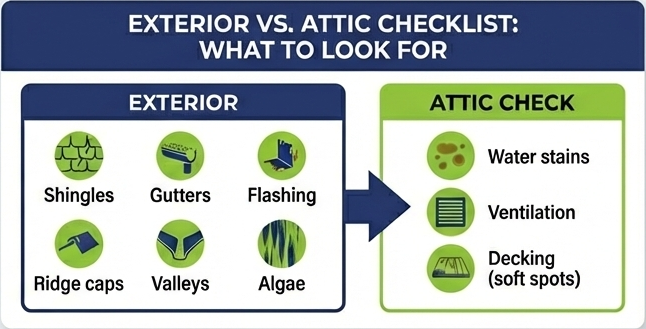
1. Shingle condition
Look for: Curling, cupping, cracking, large areas of missing granules, blistering, or shingles that look brittle.
Why it matters: Granules protect shingles from UV. When they’re gone, the asphalt dries and cracks faster.
2. Granule loss and gutters
Look for: Excess granules in gutters or downspouts (a granular sand-like buildup).
Why it matters: Heavy granule loss shortens life but moderate loss can be helped by rejuvenation if the roof structure is sound.
Flashing and seals around roof penetrations
Look for: Rusted, pulled-up, or missing flashing around chimneys, skylights, plumbing vents, HVAC curbs, and wall intersections.
Why it matters: Flashing is a common source of leaks. Loose flashings let water sneak under shingles.
Ridge caps and hip shingles
Look for: Missing ridge/hip shingles, split caps, or exposed nail heads.
Why it matters: These are high-wind, high-exposure areas critical in Florida.
Valleys and roof intersections
Look for: Deterioration where two roof planes meet (valleys), sagging decking, or gaps.
Why it matters: Valleys concentrate water flow; failures here often cause major leaks.
Gutters, soffits and fascia
Look for: Debris-filled gutters, sagging gutters, rotted fascia boards, or signs of water backflow.
Why it matters: Clogged gutters hold water at the eave and speed up edge damage.
Signs of algae, mold, or black streaks
Look for: Dark streaks, green or black growths, or fuzzy patches on shingles.
Why it matters: Florida’s humidity encourages organic growth. Left alone, they trap moisture and speed deterioration.
The attic check (inside matters as much as outside)
If you can safely access your attic, check these items from below.
Water stains and active leaks
Look for: Brown stains, wet insulation, or daylight through the deck.
Why it matters: Water in the attic can rot decking and support mold growth.
Ventilation and insulation
Look for: Blocked intake vents (soffit vents) or inadequate attic insulation and ventilation.
Why it matters: Poor ventilation traps heat, accelerating shingle oil loss. Good airflow prolongs shingle life and reduces energy costs.
Decking condition and structural issues
Look for: Soft spots when walking on the deck, sagging rafters, or nail pops.
Why it matters: Roof rejuvenation restores shingles, but it won’t fix rotten decking or structural damage.
Florida-focused items (don’t skip these)
Hurricane-readiness
Check for loose or missing shingles before hurricane season.
Look for rusted fasteners and salty coastal air speeds corrosion.
Salt and coastal exposure
Coastal homes should inspect fasteners, flashings, and metal elements more often (every 6–12 months).
Tree coverage and debris
Trim back branches that rub shingles; falling limbs during storms cause the worst sudden damage.
What the inspection can’t tell you (and when to call a pro)
Some conditions require a professional roofer or certified inspector:
- Structural or decking issues (sagging, soft spots)
- Active leaks that can’t be traced visually
- More than 25–30% of shingles missing or severe granule loss
- Roof age over 25–30 years with brittle, cracked shingles
If any of the above apply, you may need a contact expert for professional inspection.
Rejuvenation-specific checklist (is your roof a candidate?)
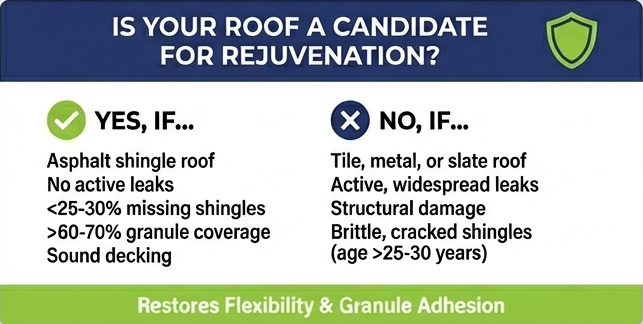
Roof rejuvenation is a cost-effective way to extend life for many Florida asphalt shingle roofs but it only works on healthy, serviceable shingles. Before booking rejuvenation, confirm:
- The roof is asphalt shingle (not tile, metal or slate).
- No active or widespread leaks.
- Less than ~25–30% of shingles are missing or severely damaged.
- The majority of shingles still have granules attached (rough guide: >60–70% granule coverage).
- Decking and flashing are structurally sound.
If your roof meets these, rejuvenation can restore flexibility, reduce cracking, and improve granule adhesion often adding 5–15 years of useful life when paired with proper maintenance.
Quick seasonal checklist (two-minute version)
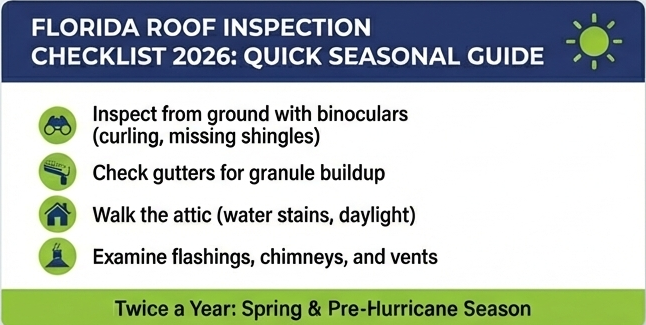
- Inspect from ground with binoculars: look for curling, missing shingles, or large stains.
- Check gutters for granule buildup.
- Walk the attic: look for water stains and daylight.
- Examine flashings, chimneys, and vents.
- If in doubt, schedule a professional roof inspection.
How often to inspect (recommended schedule)
- Twice a year: Spring and pre-hurricane season (April / May).
- After major storms: Inspect within a week if safe.
Every year inside the attic: Check for slow leaks or ventilation problems.
When rejuvenation makes sense (short guide)
You don’t need a new roof if the structure is solid and aging signs are moderate. Rejuvenation is ideal when:
- Shingles look weathered but are mostly intact.
- You want to delay replacement and save money.
- You care about reducing landfill waste and extending material life.
Important: Rejuvenation only works on asphalt shingle roofs and won’t repair structural problems or replace missing shingles.
What homeowners in Florida should do next
If your roof checks out for rejuvenation, we recommend scheduling a professional inspection. Roof Juice includes a full roof inspection before any rejuvenation treatment to confirm suitability.
Get a free inspection and quote:
Also useful related reads on our blog:
Roof Rejuvenation Cost in 2026: Does It Really Work?
5 Common Signs Your Roof Needs Rejuvenation
Closing notes keep it simple
A little attention goes a long way. Use this checklist twice a year, take photos, and keep notes by date. If you’re in Florida and your roof is asphalt shingles, roof rejuvenation can be a smart, affordable tool to extend life and avoid premature replacement.
Need help? Contact Roof Juice for a professional inspection and a no-obligation quote: